
November 15th, 2026
War is often portrayed as a series of dramatic firefights, heroic rescues, and decisive victories. But what about the hours, days, and sometimes weeks of boredom in between? In Fire Mission: The Diary of a Firing Sergeant in Afghanistan, British Army Sergeant Major Craig Douglas offers a ground-level account of six months spent serving with Hislop’s Troop in Afghanistan in 2007–2008. The result is an informative, sometimes humorous, and often sobering look at the realities of modern warfare, although readers expecting the narrative excitement of more conventional war memoirs may find it a little dry.
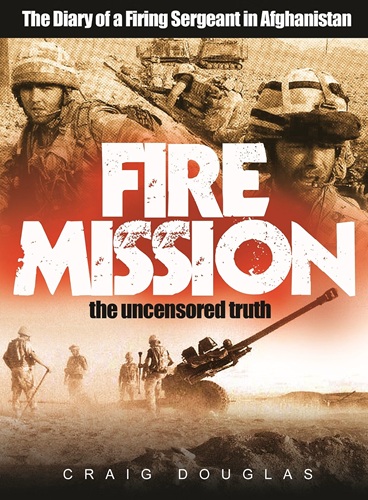
Douglas begins his diary on September 24, 2007, as his troop arrives in Afghanistan to take over from another British unit. Their destination is Patrol Base Inkerman, a remote compound surrounded by mountains and accessible through a single entrance and exit. The base has been a frequent target of Taliban attacks, and the soldiers quickly discover that life there involves an uneasy combination of routine and danger.
The mundane details of military life stand out. Soldiers exchange rations with American troops, spend hours cleaning rifles that become dusty again within minutes, struggle with unreliable radio communications, and contend with freezing temperatures, broken generators, and less-than-ideal living conditions. Douglas even documents an unfortunate outbreak of diarrhea and vomiting that spreads through a troop after someone uses the wrong toilet. These small details help make the experience feel authentic, reminding us that soldiers deal with ordinary human inconveniences even in extraordinary circumstances.
Of course, there is plenty of action, too. In November, the Taliban launch repeated attacks on Inkerman, with rockets and small-arms fire keeping the British troops on constant alert. Douglas records the fighting almost minute by minute, noting incoming fire, casualties, and intelligence reports. By November 13, the British have confirmed 44 Taliban deaths during a week of fighting. A few days later, that number reaches 55. Yet the enemy keeps coming. The diary conveys the strange rhythm of this existence: prolonged periods of inactivity interrupted by sudden, terrifying violence.
Douglas also reflects on the futility and moral ambiguity of the conflict. At one point, he writes, "I like to think we're making a positive impact here, but I think both sides (British soldiers and Taliban) are making a negative impact." It is a remarkably candid observation from someone directly involved in the fighting.
Another particularly disturbing entry concerns a 15-year-old Afghan boy reportedly hanged for accepting chocolate from an ISAF patrol. These incidents offer glimpses of the civilian population caught between opposing forces, a perspective that sometimes gets lost in military accounts.
There are also welcome moments of humanity. The soldiers rescue three chickens, naming them George, Zippy, and Bungle, and eventually prepare them for Christmas dinner. Douglas describes speaking with his wife and young son back home, while other entries reveal the psychological toll of prolonged separation, constant danger, and witnessing horrific injuries. His observation that life feels different after returning to civilization is especially poignant: "Coming back to the civilized world after six months in Afghanistan taught me that life is precious."
Fire Mission isn't necessarily an entertaining read in the traditional sense. Unlike Colby Buzzell's My War, which combines dark humor, personality, and vivid storytelling, Douglas's diary often reads like a straightforward operational log. The chronological entries, military terminology, and frequent reports of enemy casualties can become repetitive. There is relatively little exploration of the larger political questions surrounding the war, either.
Nevertheless, the book shows what deployment actually looks like for the soldiers living through it. The boredom, discomfort, camaraderie, fear, and occasional absurdity are all here. Fire Mission isn’t the most compelling war memoir, but it provides an honest, unvarnished glimpse into the daily life of a British soldier in Afghanistan.
Buy the book on Amazon.
_________________________________________________________________